
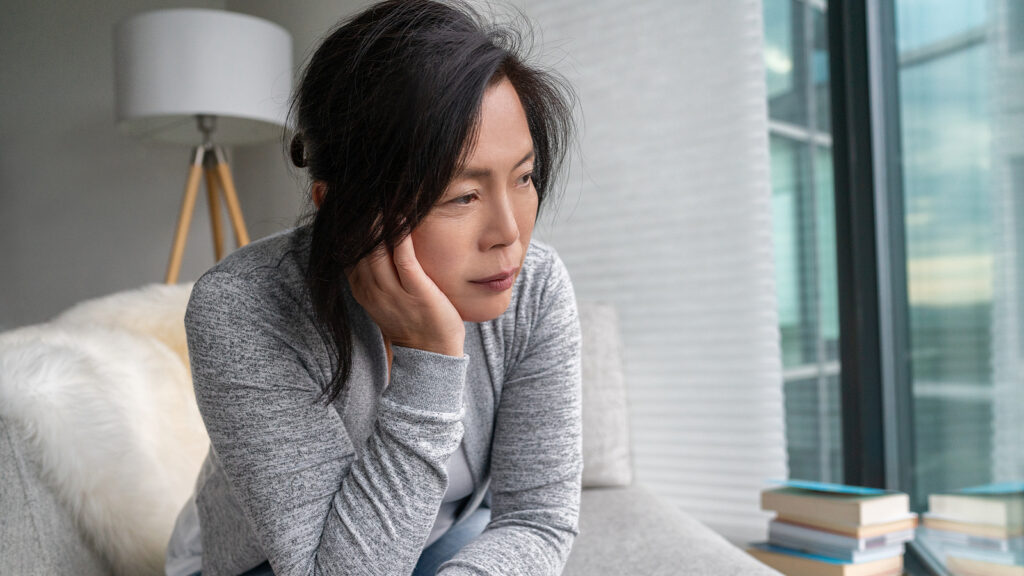
Most people picture menopause as one long, sweaty ordeal that consists of hot flushes, night sweats, and the occasional fan obsession. And while those symptoms are very real, they tell only part of the story. Many women sail right past the more obvious signs and still find themselves feeling completely off, without ever connecting the dots back to menopause.
This is especially common in Singapore, where busy lifestyles and a tendency to push through discomfort can make it easy to dismiss symptoms as stress or just “one of those phases.” In fact, a KKH study involving 1,461 women aged 45 to 65 found that 70 per cent experienced moderate to severe menopausal symptoms, and yet 70 per cent of those women had not sought medical attention. If something has felt quietly wrong for a while, it might be worth paying closer attention. Here are five hidden menopause symptoms that Singaporean women often overlook.
1. Persistent fatigue that sleep doesn’t fix
This is not the kind of tired that a good night’s rest sorts out. Menopausal fatigue sits deeper with a heavy, dragging exhaustion that follows you through the day, regardless of how many hours you slept. Many women describe it as feeling like their battery never fully charges.
What’s happening underneath is a shift in oestrogen and progesterone levels, which affects how your body regulates energy and sleep cycles. Even if you’re clocking eight hours, the quality of that sleep may be quietly suffering. You might be waking briefly and not remembering it, or spending less time in the deeper, restorative stages of sleep.
Before writing this off as burnout or anaemia, it’s worth having a proper hormonal assessment done. Endocrine treatment services can investigate whether fluctuating hormone levels are at the root of your exhaustion, and crucially, what can be done about it.
2. Anxiety and a sense of dread you can’t explain
If you’ve suddenly found yourself feeling anxious, on edge, or overwhelmed by things that never used to bother you, menopause could be the reason. This is one of the most underrecognised symptoms, partly because it looks so much like a mental health issue rather than a hormonal one.
Oestrogen plays a significant role in regulating mood-related neurotransmitters, including serotonin and dopamine. As levels dip and fluctuate, your brain’s chemistry shifts with them. Women who have never experienced anxiety before sometimes find it appearing out of nowhere in their 40s or early 50s. It’s also worth noting that for women managing other hormonal conditions, the silver lining for Singaporean women on PCOS is that existing relationships with endocrine specialists often mean these mood-related menopause symptoms get picked up earlier, rather than being left to fester unaddressed. If you’ve been feeling mentally fragile without a clear reason, please don’t assume it’s purely psychological. Hormones deserve a seat at that conversation.
3. Brain fog and memory lapses
Forgetting why you walked into a room, losing your train of thought mid-sentence, and struggling to concentrate during meetings you would have breezed through before. Brain fog is a genuinely frustrating symptom, and one that many professional women in Singapore find particularly distressing because it affects their confidence at work.
Oestrogen supports cognitive function, and when levels fall, the brain can feel sluggish and less sharp. This is temporary for most women, and tends to improve as the body settles into its post-menopausal state, but that doesn’t make it any less disruptive in the meantime. Keeping track of when the fog is worst (morning, after poor sleep, around your cycle if you’re still having periods) can help your doctor build a clearer picture of what’s going on.
4. Changes in skin, hair, and body composition
Menopause has a way of quietly rearranging things you thought were fixed. Skin that was once relatively resilient may become drier or thinner. Hair might shed more than usual or feel coarser in texture. And many women notice weight beginning to settle around the abdomen in a way it never did before, even without significant changes to their diet or exercise.
These shifts are driven largely by falling oestrogen levels, which affect collagen production, fat distribution, and scalp health. It’s not vanity to find this distressing. These changes can feel sudden and disorienting, particularly when they seem to happen within a short space of time.
Here’s a quick look at some of the common physical changes and what tends to drive them:
|
Change |
Likely Hormonal Driver |
|
Dry or thinning skin |
Reduced collagen from lower oestrogen |
|
Hair thinning or shedding |
Hormonal imbalance affecting hair follicles |
|
Abdominal weight gain |
Shift in fat distribution patterns |
|
Brittle nails |
Reduced oestrogen and nutritional shifts |
None of these changes is inevitable or untreatable. An endocrine specialist can assess the hormonal picture in full and discuss options, whether that’s lifestyle adjustments or hormone-based support.
5. Joint pain and unexplained aches
This one surprises a lot of women. Joint stiffness, aching knees, and sore shoulders are all symptoms that are commonly attributed to ageing or overuse. But here’s the thing: oestrogen has anti-inflammatory properties, and as levels decline, inflammation in the joints can increase, leading to discomfort that feels more like arthritis than anything hormonal.
This is actually well-supported locally. According to Singapore’s first Menopause Management Guidelines, launched by KK Women’s and Children’s Hospital (KKH), the top symptom experienced by Singaporean women during the menopause transition is new-onset musculoskeletal symptoms (joint and muscle aches), which differs from Western populations, where hot flushes tend to top the list.
Some women notice this most in the morning, with stiffness that eases after moving around. Others experience a more general achiness that migrates around the body without a clear pattern. Either way, it’s easy to spend months visiting the wrong specialists before anyone links it back to menopause. If you’ve been managing unexplained joint pain alongside other symptoms on this list, it’s worth bringing the full picture to a doctor who can look at everything together.
Conclusion
Menopause is not just a hot flush waiting to happen. It’s a wide-ranging hormonal transition that can touch everything from your mood and memory to your joints and jawline. The growing attention menopause is receiving in Singapore, including the rollout of the country’s first national guidelines, is a step in the right direction. But guidelines only help if women actually come forward.
If you’re in Singapore and finding that something just doesn’t feel right, LW Cho Endocrine Clinic is here to help. Specialising in hormonal health, our clinic offers comprehensive assessments and personalised treatment plans for women navigating menopause and other endocrine conditions. You don’t have to piece it together on your own. Reach out to LW Cho Endocrine Clinic today and get the clarity and support you deserve.